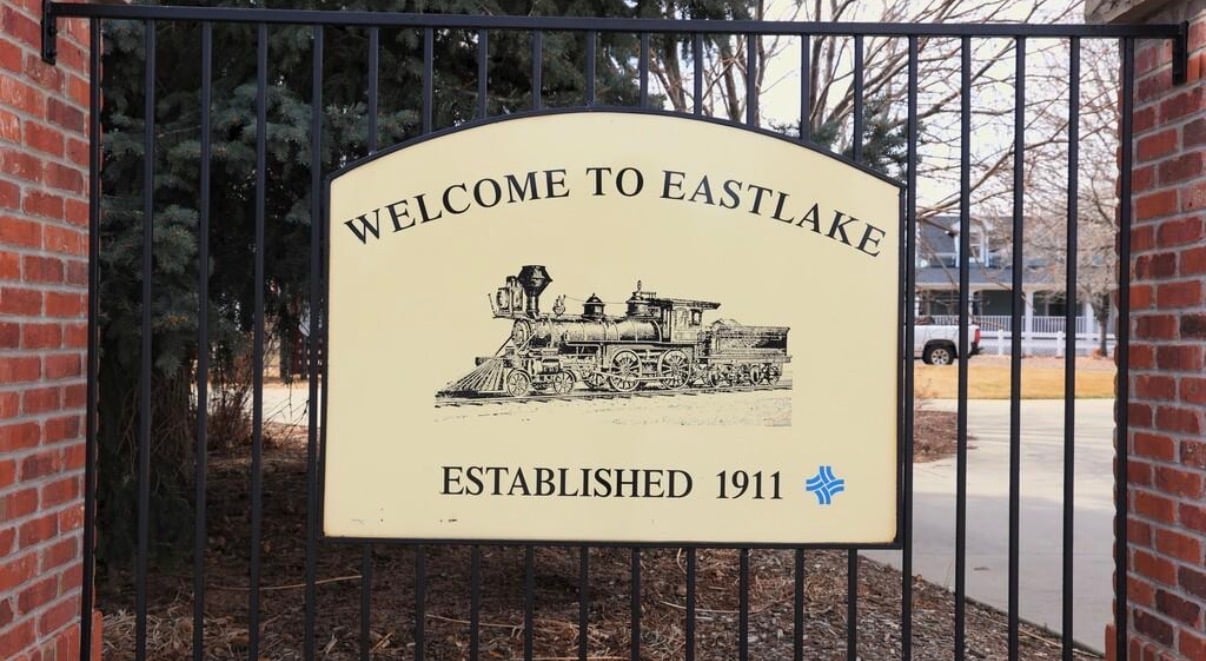
Eastlake: Where Thornton’s History and Future Meet
Thornton has changed dramatically over the past several decades. New neighborhoods, businesses, transportation infrastructure and continued growth have transformed much of North Metro Denver.
But tucked into northern Thornton is a community whose story began long before much of that growth arrived.
Eastlake is the oldest neighborhood in the City of Thornton, with roots dating back to the early 1900s. More than a century later, its railroad history, residential character and distinctive street pattern remain visible today.
And as Thornton continues to grow around it, Eastlake offers an interesting look at one of the challenges facing established communities throughout Colorado:
How do you welcome progress without losing the character that made a place distinctive in the first place?
From Railroad Village to Thornton Neighborhood
Eastlake’s history begins with the railroad.
The community was established in 1911 along what is now the Union Pacific railroad corridor. Unlike many of the suburban neighborhoods that would later define this part of Colorado, Eastlake developed as a small agricultural and railroad community.
The town served surrounding farms and grew to include businesses and services such as a bank, lumber yard, grocery store, mercantile, post office and blacksmith. Two grain elevators served the area’s agricultural economy, while churches and a school helped establish Eastlake as a community of its own.
That history also shaped the physical layout of the neighborhood.
Rather than the curving streets and larger subdivisions associated with later suburban development, historic Eastlake developed around a traditional street grid with smaller lots, alleys and a compact commercial area.
Those characteristics still help give Eastlake a sense of place that feels noticeably different from many of the neighborhoods surrounding it.
Eastlake was eventually annexed into Thornton in 1990, bringing the historic community into a much larger and rapidly growing city.
A Landmark That Still Tells the Story
Perhaps no structure represents Eastlake’s agricultural history better than the Eastlake Farmers Co-Operative Grain Elevator.
Built in 1920, the elevator once played a role in storing agricultural commodities produced by farms throughout the surrounding area.
Today, it remains one of Eastlake’s most recognizable landmarks.
The structure was added to the National Register of Historic Places and Colorado State Register of Historic Properties in 2010, recognizing its significance to Colorado’s agricultural heritage.
Thornton has since undertaken preservation work on the elevator, and the surrounding area is envisioned as a place where pieces of Eastlake’s history can continue to be interpreted and appreciated.
For a city that has experienced extraordinary growth, preserving structures like this provides a physical connection between Thornton today and the communities that existed here generations ago.
What Makes Historic Eastlake Different
Eastlake’s character isn’t defined by a single building.
The City of Thornton’s planning documents recognize several characteristics that collectively distinguish the neighborhood: its grid street pattern, traditionally modest homes, smaller residential lots, alleys, mature trees and landscaping, and the relationship between residential streets and the historic commercial area.
The city has even established an Eastlake Residential District specifically intended to preserve and enhance the residential areas of the community while encouraging redevelopment that respects its established single-family heritage and design character.
That distinction matters.
Growth is inevitable in a desirable metropolitan area. But thoughtful growth can recognize that established communities aren’t blank canvases. They have histories, development patterns and characteristics that deserve consideration as new investment occurs around them.
The N Line Brings Eastlake Full Circle
There is something particularly fitting about rail once again playing an important role in Eastlake’s future.
The community originally developed because of its relationship with the railroad. More than a century later, Eastlake is once again connected to the broader Denver region by rail through RTD’s N Line.
The Eastlake & 124th Station currently serves as the northern terminus of the line.
Its arrival created opportunities for transit-oriented development, improved regional connectivity and additional investment around the station.
Thornton’s planning for the area has attempted to balance those opportunities with Eastlake’s existing character. The city’s Eastlake Station Area Master Plan and subsequent planning efforts emphasize walkability, pedestrian-oriented development, public spaces and appropriate redevelopment around the station.
The city has also developed a streetscape plan for portions of Lake Avenue, First Street and York Avenue intended to improve accessibility and walkability in Old Town Eastlake while encouraging continued economic vitality.
In many ways, Eastlake’s transportation history has come full circle.
The railroad helped create the community.
Rail transportation is now helping shape its next chapter.
Preserving Character While Planning for Growth
That next chapter will be important.
Thornton continues to grow, and development throughout North Metro creates both opportunities and pressure for established neighborhoods.
Eastlake sits in an especially interesting position because it combines historic residential areas, access to commuter rail, nearby open space and opportunities for redevelopment.
Thornton’s planning framework recognizes that those interests don’t necessarily have to compete with one another.
New investment can occur while historic resources are preserved. Transportation can improve while neighborhoods retain their identity. Redevelopment can happen while acknowledging the scale and character of the community around it.
Getting that balance right will ultimately require continued involvement from residents, property owners, businesses and the city itself.
What This Means for Eastlake Homeowners
Eastlake’s unique character also matters from a real estate perspective.
Established neighborhoods don’t always fit neatly into a price-per-square-foot calculation.
Homes can differ significantly in age, condition, renovations, lot configuration, garage arrangements and other characteristics. In an area with a mixture of older housing and newer development nearby, understanding those differences becomes particularly important when evaluating a property.
The same applies when homeowners consider renovations.
Improving an established home doesn’t necessarily mean removing everything that makes it distinctive. Thoughtful renovation can improve functionality, efficiency and marketability while respecting the character of the property and surrounding neighborhood.
It also means understanding where investment actually makes financial sense.
Before undertaking a substantial renovation in preparation for a future sale, homeowners should understand what comparable properties are achieving in the current market and which improvements buyers are actually rewarding.
Sometimes a major renovation is justified.
Sometimes thoughtful maintenance, selective updates and strong presentation are the better investment.
Why Eastlake Matters
It’s easy to think about North Metro entirely in terms of what’s being built next.
Eastlake is a reminder that understanding where a community is going also requires understanding where it came from.
Its agricultural beginnings, railroad history, historic structures and residential character represent a piece of Thornton that can’t simply be recreated through new development.
At the same time, preservation doesn’t mean preventing change.
Eastlake’s story continues to evolve through transportation investment, planning, redevelopment and the people who call the neighborhood home.
The opportunity is to make sure the next chapter adds to that story rather than erasing the chapters that came before it.
A North Metro Perspective
North Metro has always been personal to me.
I grew up here, attended local schools here and watched communities throughout Thornton, Broomfield, Northglenn and the surrounding area change considerably over the years.
Today, as a real estate professional working throughout North Metro, I believe understanding a neighborhood requires more than knowing its recent sales.
It means understanding its homes, its history, the investments happening around it and the long-term decisions that may shape its future.
Eastlake is a great example of why that broader perspective matters.
For homeowners who have questions about the Eastlake real estate market, preparing a property for sale, renovating an established home or simply understanding how their property fits into the changing North Metro landscape, I’m always happy to be a resource.
Eric Roberson
Broker Associate | The Agency
Real Estate · Investment · Development
Sources & Further Reading
City of Thornton — 2017 Eastlake Subarea Plan
City of Thornton — Eastlake Historic Buildings Survey
City of Thornton — Eastlake at 124th Station Area Master Plan
City of Thornton — Eastlake Streetscape Conceptual Plan
City of Thornton — Eastlake Residential District
City of Thornton — Historic Preservation Planning
